
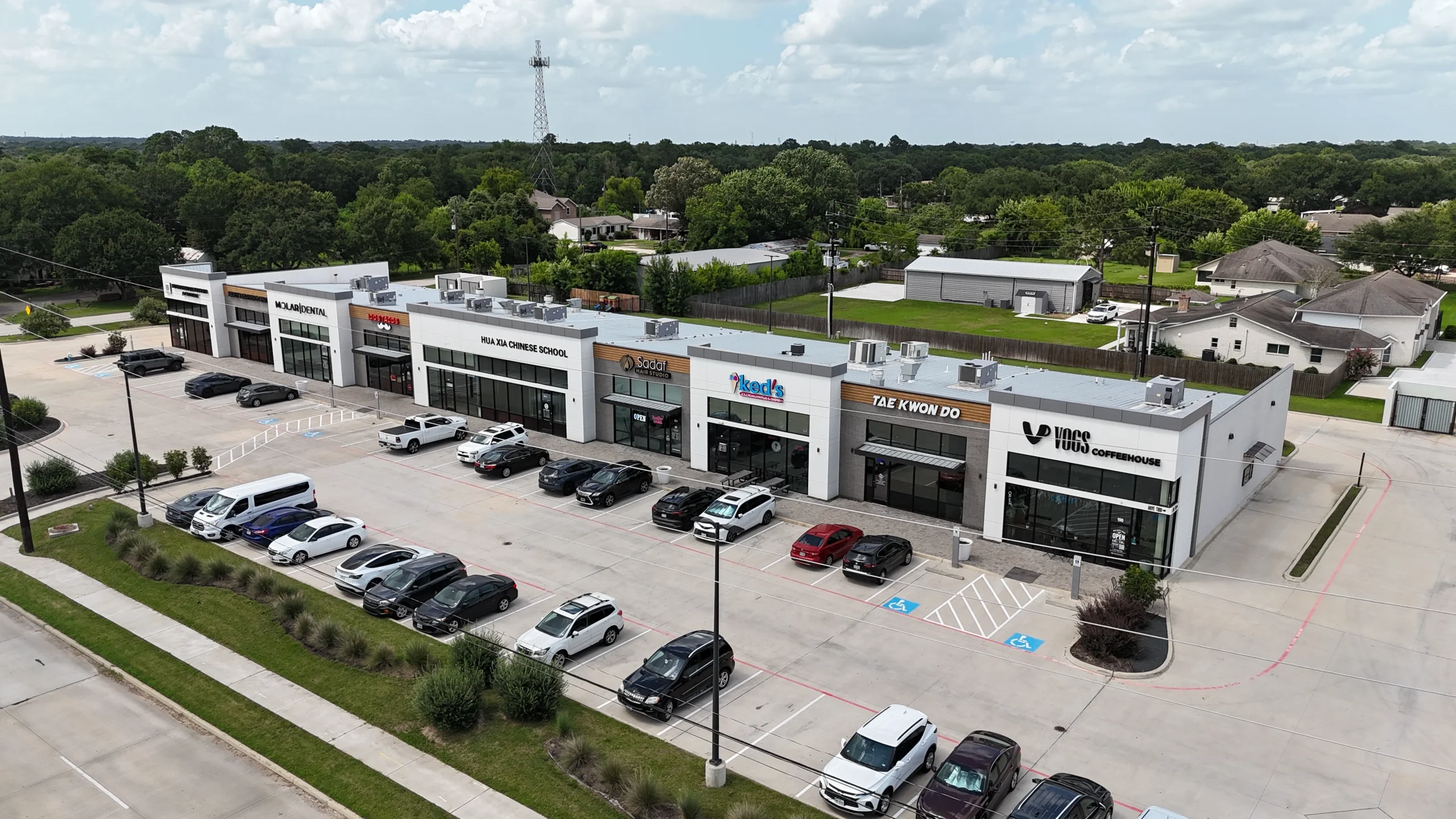
Houston’s rapid population growth and expanding suburban communities have created new opportunities across many sectors of commercial real estate. One property type that continues to perform well is the multi-tenant unanchored retail center.
Unlike large shopping centers anchored by grocery stores or national department stores, unanchored retail centers are typically occupied by a mix of local businesses, restaurants, medical users, and service providers. These centers play an important role in growing communities by offering convenient, everyday services close to where people live and work.
For investors, they can provide diversified income, steady tenant demand, and long-term appreciation when developed in the right locations.
What Is a Multi-Tenant Unanchored Retail Center?
A multi-tenant unanchored retail center is a commercial property made up of several retail spaces leased to multiple businesses without relying on a major anchor tenant.
These centers are commonly found along busy roads, near residential neighborhoods, and at high-traffic intersections. They are designed to serve the daily needs of the surrounding community while giving local businesses excellent visibility and accessibility.
Most centers range from 10,000 to 50,000 square feet and include a variety of tenant sizes to accommodate different business types.
Who Leases Space in These Centers?
One of the biggest advantages of an unanchored retail center is its diverse tenant mix.
A well-balanced property may include:
- Restaurants and coffee shops
- Medical and dental offices
- Fitness studios
- Insurance and financial service providers
- Hair salons and barbershops
- Pet grooming businesses
- Boutique retailers
- Daycare or educational services
- Professional offices
- Specialty food and beverage concepts
Because these businesses provide everyday goods and services, they often benefit from consistent customer traffic generated by the surrounding neighborhood.
Why Houston Is an Attractive Market
Houston continues to be one of the fastest-growing metropolitan areas in the country, with communities such as Katy, Tomball, Cypress, Spring, Pearland, and others seeing continued residential and commercial expansion.
As thousands of new homes are built each year, demand grows for nearby restaurants, healthcare providers, personal services, and neighborhood shopping. Developers have responded by building retail centers that make these services more convenient for residents.
Many of these suburban areas still have opportunities for thoughtfully planned retail developments that can meet the needs of growing populations.
Why Investors Like Multi-Tenant Retail Centers
Several factors make this property type attractive to commercial real estate investors.
Multiple Income Sources
With several tenants occupying one property, rental income is spread across multiple businesses instead of relying on a single occupant.
Strong Everyday Demand
Many tenants provide services that people use regularly, helping support consistent customer traffic throughout the year.
Long-Term Lease Potential
Retail tenants often invest significant capital into their spaces, making them more likely to remain in place for longer lease terms.
Opportunity for Rent Growth
As surrounding neighborhoods mature and traffic increases, well-positioned retail centers may benefit from rising rental rates and increasing property values.
What Makes a Successful Retail Development?
Location is one of the most important drivers of success.
The strongest retail centers are typically located near major roadways, growing residential communities, schools, and employment centers. High visibility, easy access, and convenient parking all contribute to a property’s ability to attract quality tenants.
Other desirable features include:
- Attractive modern architecture
- Excellent street visibility
- Convenient parking
- Strong traffic counts
- Quality landscaping
- Flexible suite sizes
- Outdoor patio opportunities for restaurants
- Monument signage with high visibility
A carefully selected tenant mix is equally important. Businesses that complement one another can create a destination that encourages repeat visits and benefits every tenant within the center.
Looking Ahead
As Houston continues to expand, neighborhood retail is expected to remain an essential part of new community development. While shopping habits continue to evolve, demand for businesses that provide dining, healthcare, fitness, beauty services, and other everyday necessities remains strong.
Multi-tenant unanchored retail centers are well positioned to serve these needs while offering investors diversified income and the potential for long-term value creation.
At Luna Core Capital, we focus on identifying high-growth suburban markets where new residential development is creating long-term demand for neighborhood retail. By developing well-designed retail centers in strategic locations, our goal is to create lasting value for both tenants and investors while supporting the communities we serve.